Thursday, August 29, 2019
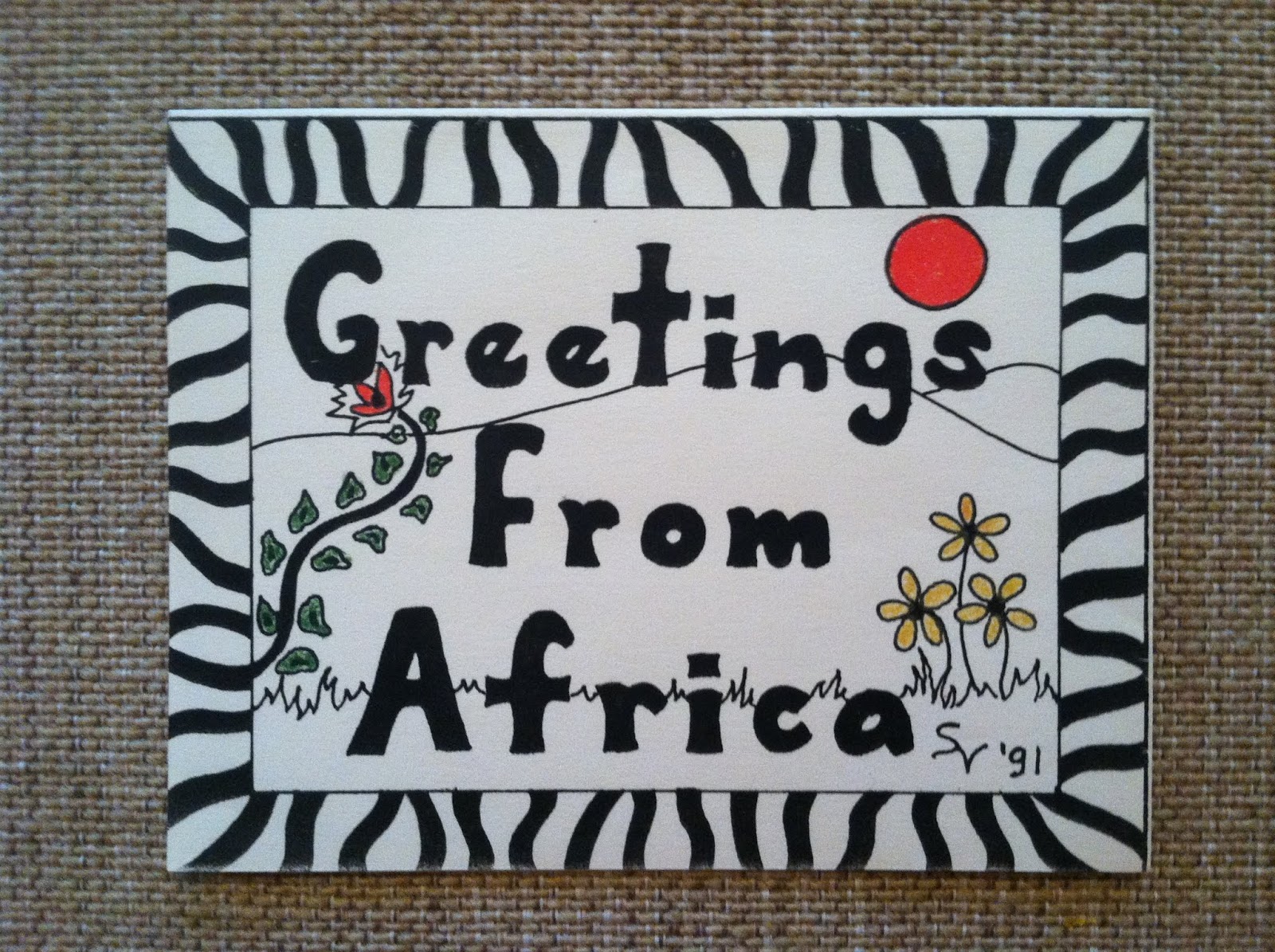
December 1991
Dear folks and friends,
Yes, we're still in Ouagadougou, but this is our last year. To make sure of that, we resigned our jobs last May, effective June 1992. Four years in "paradise" is quite enough, thank you. Actually, we have enjoyed our time here more than not, and we're sure that our remembrance of the place will be very fond indeed, once we get the dust out of our lungs, the amoebas out of our bowels, and lose the weight that we have gained from vegging out in front of the video every night.
The best thing about our stay here has been the jobs. I've been very happy as a school director, and I've been able to accomplish just about all the goals that I set when we first came. The most ambitious was the construction of an entirely new school, something which will become a reality by the time you read this. To be able to plan a full educational facility from scratch and then see it through to its completion is a wonderful opportunity for anyone, and I've been lucky to do it here. I've also been very active in the Association of International Schools in Africa (AISA) and have recently assumed its presidency. And I'm just short of getting my PhD, with only my dissertation to complete (hopefully, this summer).
Sharon has also been able to expand her career in several new directions while in Ouagadougou. She has gotten into administration (she doesn't care for it) as the primary principal, she wrote a manual on library management that is being used in many small international schools on this continent, she has been in demand as a consultant to other international schools, and she has been able to have her own class of students as an elementary teacher rather than as a specialist, something which she always thought she would enjoy (she does).
Although we have lived in relative isolation here, we have managed to travel quite a bit over the years, including many trips to the States, two trips to Kenya, one to Lesotho, several to neighboring West African countries, and our first trip to the Caribbean this past summer. We notice that, as we get older, we are beginning to slow down when it comes to travel and that the comfort level that we require has risen quite a bit. Trips which we would formerly have taken have just seemed like too much of a hassle or too dangerous. What a bunch of old fogies we are! We even spend time (and money) planning for retirement!
In February, we will travel to the States for the annual administrator conference and recruiting fairs, and we'll try to rustle up some jobs for ourselves. We haven't a clue where we will be next year, which is both exhilarating and frightening at the same time. We are open to just about anywhere, but, please, not another Ouagadougou! We've paid our dues!!!!! Actually, we like Third World living (and the perks that come with it) and wouldn't mind a similar post, but perhaps a bit more "upscale."
In March, we will be in Lome, Togo for another teacher conference, and in April, we will go to Nairobi once again, this time for a meeting of the AISA board. Since the trip coincides with our Easter vacation, we'll get in a little safari time as well. We still think that Kenya is the best tourist place we've ever been, so we love it whenever we can get the chance to return.
No matter what happens in the job market, however, we will be home in South Carolina this summer for at least a few weeks. We have enjoyed having our apartment on Lake Murray as a refuge during our winter and summer trips to the States, and we even purchased another one last year which is closer to the water. It's rented out now, but we may just move into it when we retire in the year 2001.
And on that old fogey note, I will close this Christmas letter with our love and best wishes of this holiday season.
Tuesday, August 27, 2019
December 1990
Dear friends and loved ones,
In June of 1970, Sharon and I quit our jobs and left New Jersey for the first time to go to the University of Hawaii for graduate study. That simple but momentous decision started us on the road to a new and, we feel, exciting life of travel and experience which we are still enjoying to this day. Now, 20 years, many grey hairs and 5 graduate degrees later, we find ourselves in our third year in Burkina Faso, surely the most challenging environment in which we have had to live and work.
The past 20 years have been very good to us. Through having attended graduate school in Hawaii, South Carolina, Athens and Mallorca, we have managed to keep our careers in education on track, although we did make a few detours (insect research, renting cars, etc.) to keep us in tuna sandwiches when adventure but no jobs called. Ken is now the director of a small school, and Sharon is the principal of the primary grades in the same institution. Happily, we have been able to work together for 11 of the past 20 years. Sharing responsibilities, triumphs and disappointments (disasters?) has been of enormous importance to us.
Moreover, we have been able to enrich our lives with an array of experiences that we never thought possible when we were living in NJ so many years ago. Without sacrificing our careers or financial security, we have been fortunate enough to peer into the bowels of a live volcano in Hawaii and watch glaciers calving in New Zealand. We have felt the earth tremble under our feet at Victoria Falls in Zimbabwe and touched snow on the Equator while climbing Mount Kenya. We have hiked on the Matterhorn in Switzerland and strolled among the Grand Tetons in Wyoming. We have cruised the Nile, sipped cocktails at sunset on the Zambezi, and sailed to Rarotonga and Suvorov in the South Pacific. We have SCUBA dived among sunken warships in Truk Lagoon, frolicked with dolphins in the warm waters of the Indian Ocean, and driven our small boat through pods of humpback whales playing in the Lahaina Roads off Maui.
We have been able to celebrate Carnival in Rio and Bastille Day in Papeete. We have seen first hand the great monuments of Western civilization, such as the Parthenon, the Coliseum and the pyramids of Giza, and also witnessed the incomparable natural spectacle of the wildebeest migration on the Serengeti plain and walked among the million pink flamingoes of Lake Nakuru.
We have taken the low road, the high road and seemingly every road in between -- from camping in a flooded tent, to crashing in a fleabag hotel in Tahiti, to luxuriating in the posh suites of the Mount Kenya Safari Club. We have had elephants chase us away from our picnic lunch, we've quaked at the roaring of lions outside our tent, and we've been startled by sharks circling us just at the edge of our view. We have been arrested by greedy border guards in Tanzania and terrorized during 22 hours of captivity. Healthwise, we have suffered through malaria, pneumonia, bronchitis, appendicitis, food poisoning and enough forms of intestinal parasites to keep a lab working overtime. As you can see, it has not all been a picnic!
Through sickness and in health, however, we have not regretted the time nor money spent, and each time that we return to the States, we seem to value our home and the U. S. even more for having been away. We do not know exactly what the future holds for us. We do know that our contracts say we will be here until June 1992, and then we will most likely leave for another part of this continent or to another continent entirely. Or, if trouble should erupt here, maybe we'll be back in the States sooner than we thought! We have learned to live with uncertainty and insecurity -- something which is both unnerving and invigorating.
Until next Christmas season, we wish you all a glorious holiday and a super New Year filled with challenges and good cheer.
Tuesday, August 20, 2019
December 1989 -- Ouagadougou Daze
Rain...
August in Ouagadougou is a time of violence. Each day begins heavily, often without a hint of a breeze. The air, sodden with humidity, lies languorously over the earth, making the very act of breathing a chore and nurturing vegetation on the furniture and in one's closets.
As the afternoon heat builds, and the sweat continues to drip, one knows that -- like the inevitability of living on the San Andreas fault -- something has to break.
And then the wind begins. Rushing in with the arrogance and velocity of a high speed train, it whips up the refuse and dust from the street in great swirls of brownish red putrefaction, until the sun disappears from the sky and day becomes night.
When the rain finally hits, accompanied by great bolts of lightening and booming thunder, it attacks the earth ferociously, beating a frenzied rhythm on the tin roof and ripping the very leaves from the trees. For us, it is amusement, but for the Africans, it is both a blessing and a disaster.
Without this water, there can be no life, for the country's millet crop is dependent on the annual rains. But the outsized raindrops also tear at the mudbrick houses, literally melting them before their owners' eyes, and the streambeds -- normally dry gulches of hardened earth -- become the conduits for raging torrents that carve the land mercilessly, plundering its fertility.
In this part of Africa, life does not come easy, and the gods are unforgiving.
Heat...
The dog days of April in Ouaga are like a foretaste of hell. The sun burns in the sky with an unrelenting intensity, bringing soaring temperatures that seer both the earth and one's soul.
We drive to the reservoir just outside of town to see what the depredations of six months without rain have wrought upon the city's principal water supply. The air passing through the window feels like a blast from a blow-dryer. Our eyeballs become parched -- even our armpits have dandruff.
The reservoir is depleted. Where once there was a lake robust enough to service a fleet of Hobie Cats, there is now a mudhole. The doctors issue warnings -- cholera, typhoid, and loathsome diseases that used to ravage Medieval Europe now flourish in our water supply.
We return home with heat induced headaches. The thermometer on our veranda begs for mercy. Our bodies cry out for liquid.
Pass me a beer. Ahhhhhhh. Burp.
and Dust...
The earth in and around Ouagadougou seems as though it had been put through a supermarket coffee grinder placed on "dust" setting. A few weeks after the rains stop, the dust is everywhere -- seeping through the cracks in windows, settling on the floors and furniture, and even invading the most private recesses of drawers and closets. During the day, cyclists and house guards can be seen wearing surgical masks to avoid inhaling the air. It is like trying to breathe Coffeemate.
We venture out at night for a walk. Foolish move. The dust, wafted up by the cars and reflected by the streetlights, looks like snow. We taste the grit in our mouths; our teeth begin to grind.
The amber headlights of vehicles transform the night into surreality, a Mars-scape of dark yellows and unearthly orange. Two pedestrians, backlit by a car weaving its way around potholes, appear as giant holograms reflected on a ghostly screen. We expect Rod Serling to step out of the shadows at any moment.
"Welcome...to the Twilight Zone."
Magic...
About 400 meters from our house, there is a marketplace that specializes in products that will never make it to the shelves of your local 7-Eleven.
It is a place where religion and magic find an interface, where medicine and superstition come together in a forced and ghastly harmony.
"Step right up, folks. Need a love potion? Let's grind up a few lizard tongues, bat wings and dried toads. Mother-in-law on your back? No problem. Desiccated chameleon and monkey paws taken with a glass of beer will send her packing."
The fetishes are organized and lined up like fish on ice. Birds of every stripe and color, their heads carefully removed, lie in state next to the cloven hooves of goats and sheep. Skulls of lizards, monkeys, dogs, cats and other unrecognizable small animals stare at passersby through hollow eyes.
Dried bats, geckos, chameleons -- our own voodoo K-Mart -- and that's just the stuff on display. We wonder what's hidden in the back room?
"Step right up, folks, we've got just what you're looking for. And for the ladies..."
Deliverance...
Yimdi is a traditional village of the Mossi tribe, the predominant ethnic group in Burkina Fasso. It is located about 20 minutes outside of Ouagougou, but in a world totally removed from the amber night lights, boisterous street noise, and urban squalor of the city.
For as long as the people of Yimdi can remember, they have lived in a state of siege during the dry season. At that time, their shallow, hand-dug wells dry up, and they are forced to march for miles to a neighboring village each day and carry back on their heads only enough water for drinking and cooking. Washing is out of the question, and their pitiful vegetable gardens are left to wilt and die.
This year, the school completed a project to build the village a permanent water supply. With money supplied by the Dutch government and various fund raising projects at the school, we managed to dig a well and cap it with a donated hand pump.
The village has now moved from the Stone Age into the 19th century. It feels good.
Things Fall Apart...
About 4 hours to the south of us lies a relatively unspoiled and beautiful oasis of tranquility. It is a game ranch, developed by two Canadian brothers who were raised in Burkina by their missionary parents and who have dedicated their lives to the conservation of the country's wildlife while adding to the economic well-being of the locals.
In a country where arable land is scarce, the competition between humans and wildlife can be fierce -- and the animals always lose. Realizing this, the brothers combined the concepts of game preservation and controlled harvesting to demonstrate to the locals that wild animals can be a source of income and food -- a resource worth preserving.
They bulldozed roads, dammed up streams to create permanent sources of water to attract animals, and hired the poachers as game wardens, paying them to protect the animals instead of kill them. They built tourist facilities out of local materials, constructed an abattoir to pack the game meat for sale, hired biologists to study the animals' reproductive capacity, and set in motion the beginnings of a safari industry to attract high paying guests from abroad.
Government officials visited the facility, were impressed with what had been accomplished, and saw that it was good. And so they took it...and kicked the two brothers out.
And so it goes.
We've signed on here until June 1992, or until things fall apart, whichever comes first. As of this June, our address will be: 01 B.P. 35, Ouagadougou 01, Burkina Faso. Use international airmail.
Merry Christmas, everyone.
Friday, August 16, 2019
December 1988
Dear everyone,
Well, we've really done it this time! As you know, we've been in some out of the way places (Lanai, Pago Pago, Zanzibar, etc.) in our time, but Ouagadougou, Burkina Faso, is certainly the most remote, most primitive in our experience. In previous Christmas notes, we have always invited people to visit us, but that pattern will not be repeated here, unless one really has a need to see life on the edge.
With that introduction, let me start at the beginning and bring you up to date with our lives. Last year, we were in Columbia, SC, with Sharon working at the University and Ken studying full time. About midway through the year, we realized that we were running out of money, and also that the call of overseas life (after 2 years in the States) was too strong for us to resist any longer. We were fortunate to find positions at the International School of Ouagadougou on a two year contract, with Ken as the director and Sharon as a teacher and library consultant. By the end of June, we were off to England for two weeks of vacation -- and rain --and then found ourselves back on the African continent in mid-July. And so the adventure begins.
Ouagadougou (which is pronounced like something you might step in on the street) is located a bit south of Timbuktu, which I always thought was a mythical place, in the Sahel region of West Africa -- a semi-arid land between the Sahara desert and the humid forests of the coastal plain. It is the capital of Burkina Faso, formerly Upper Volta -- perhaps the third poorest country in the world and whose principal export is its own people to work in the fields and factories of neighboring countries.
Ouagadougou -- in fact, the whole country -- is a feast for the senses of sight, taste and smell...but it's like being invited to a banquet at a vomitorium. It is life in the raw -- in its most elemental state -- where grain is ripped from the stalk, pounded, winnowed and ground into food right before your eyes...where one's morning jog is a slalom course around an assortment of potholes, half-starved curs, mangy chickens, wild-eyed guinea fowl and scrofulous vultures, all picking at the garbage lying by the side of the road...and where water, the very source of life, is just as likely to be the cause of unspeakable disease and even death.
To give you an idea of what I mean, let's take a walk to the bakery at the end of our street. As we pass through the screen doors which separate our Western style house from our wide verandah and walk the short distance to our gate, it is like moving from Middle America into the Twilight Zone. A bizarre array of characters moves into view -- a Muslim from the North, bearded and swathed in white robes and turban...a rickety donkey cart, laden with bamboo slats, driven by a waif clad in rags...a dust-covered woman, pregnant and totally naked, walking aimlessly, with pendulous breasts swinging to and fro while she mumbles incomprehensively to herself...a Tuareg from the deserts, tall and swarthy, clothed in the indigo robes for which his race is famous, trying to hawk finely worked leather goods...and a gaggle of scrawny children and bawling babies, playing in the filth which lies outside their homes.
As we look to the right, we pass by the U.S. Embassy compound, surrounded by its iron fence and guarded by an array of lethargic local employees who congregate under the trees to escape from the sun...and work. To the left are broken down homes made of sun-dried, mud bricks, corrugated iron sheets for roofs, offering the barest of shelter for uncountable numbers of people. At the end of our street is the airport road, a paved thoroughfare which is normally jammed with bicycles, motorbikes, and a few cars weaving their way among the two-wheeled vehicles. We look into a ditch by the side of the road -- a man is standing in a puddle of blood and gore, wringing the necks of a flock of chickens and disemboweling them on the spot. We cross the street and are greeted by old beggars, their eyes staring vacantly -- blinded long ago by parasites introduced through the bites of black flies which inhabit the banks of the country's few rivers -- connected to children by short poles which are used to guide them on their morning rounds. We reach the outside of the bakery, artfully dodging the deformed parking boys and street vendors hawking fly-blown meat and moldy bread, open the door, enter and...we're in Paris. Long baguettes, light and fluffy croissants, an assortment of sorbets and crème glaces, raison buns, cream doughnuts, café au lait, freshly squeezed orange juice, and wrought iron tables at which one can sit all morning while one reads L'Express or the International Herald Tribune. Incredible!
At this point, it would not be inappropriate for the reader to ask, "What the hell are you doing there?" It is a question which sometimes crosses our own minds, but the truth is: Everyday is an adventure! We never know what each morning will bring, whether at school (which is wonderful, by the way) or at a visit to a local village where we are treated with such hospitality that we weep with shame at our own selfishness. We work very hard, 7 days a week, sometimes from 5:00 in the morning to 9:00 at night, and we are frequently physically and emotionally drained, but we feel very much ALIVE and excited. True, we miss the wildlife of Kenya -- the most wildlife one sees here is on the slides of our stool samples at the health unit -- and we are anxious about our health in a country where one's bowels often feel like they've been invaded by ping-pong playing amoebas from hell. And we certainly miss the serenity and beauty of an afternoon on Lake Murray or a weekend at a country inn on the foothills of the Smokey Mountains.
But those things will still be there when we return, and for now, there are still exotic places to visit and adventures to be had. We have begun to chalk up new countries on our list of must-see sights: a visit to Niamey, the capital of Niger, and a week in Abidjan, Ivory Coast, the French West African answer to Honolulu. During the Christmas holidays, we will camp at Nazinga, one of the few wild animal preserves in the country, and perhaps take a ride into the desert. In April, when the heat becomes so oppressive in Ouaga that even the vultures begin to wilt, we will travel to the humid coast and laze in the shade. This summer we will be Stateside again for six weeks, and next year we know we will visit Nairobi for a teachers' conference. Who knows what else lies ahead? Bamako, Banjul, Dakar -- a whole host of exotic locales.
At any rate, we are very much interested in receiving mail here in the peripheries of civilization, so please write when you have the chance. We promise to answer all letters as soon as we have a free moment. Until next time, however, we wish everyone a most Merry Christmas and a New Year filled with only goodness and love.
Wednesday, August 14, 2019
December 1987
(Editor's Note: Since we were not able to find a copy of the 1987 Christmas newsletter, we're creating an account of the major events of the year as we remember them.)
Although our Christmas card shows the shoreline of our new home at Yacht Cove in Columbia, SC, we didn't actually move in until around June. Before that we did some more traveling.
In December of 1986, Ken's parents graciously took us (and Ken's brother and sister-in-law) along with them on a cruise to the Bahamas, Mexico, and Puerto Rico. After very enjoyable shore excursions in Nassau, San Juan, and Cancun, we got caught in a big storm on the way back to Florida, even causing us to miss a scheduled stop at a private island. Luckily, we made it back safely. What we hadn't realized at the time, however, was that the same storm also affected the NJ coastline, causing flash flooding in Point Pleasant Beach where Sharon's father and his girlfriend had to be rescued through the window of her car as they were trying to escape from her flooding house.
Then in February, we took two more trips. The first one was to New Orleans, where we attended the annual winter conference of the Association for the Advancement of International Education (AAIE). There we reconnected with many of our former colleagues who were working at American International Schools around the globe.
Our next trip was to Brazil during Carnival in Rio de Janeiro. Although we're glad to have had the opportunity to experience this amazing phenomenon, in actuality, it was a mixed blessing to be sure. First of all, while checking in at the airport, we were told that there were no seats available that would allow us to sit next to each other on the plane. That simple realization, indicating our lack of control over our situation, triggered an attack of post traumatic stress for Sharon, making her relive the trauma we had experienced at the Kenya/Tanzania border the year before, when we had been detained and terrorized by the Tanzanian border officials. In an effort to neutralize the situation, Ken offered a passenger with a seat next to Sharon $200 to switch seats with him -- no dice. Another passenger, who had the seat next to Ken, heard what was happening and offered to switch seats with Sharon, for no fee at all! What a prince!
While in Rio, we also fell victim to a clever pick-pocket on a bus. Then, after another crazy bus driver almost ran us off a cliff, we pulled the "stop cord." Amazingly, he responded to that, and we got off. However, as Ken would be happy to tell you, it was all worthwhile just to see those topless beauties on Ipanema Beach. Aahhh!
With our planned travel now in the rear view window, we settled into our new home, ready to get down to business -- Ken's doctoral program, plus a job for Sharon (to help pay the bills). After Sharon began work as a school librarian at a local elementary school, however, it soon became obvious that her battle with PTSD was not yet over. Thanks to the assistance of a good counselor at the University of South Carolina, plus the empathetic attitude of the head of personnel in the public school district, Sharon was allowed to resign with no blemish on her record (even offered a job if and when she was ready to return!). Supportive friends at the College of Education then hired Sharon to assist them with their accreditation report. This proved to be a good bridge back to normalcy, as well as an opportunity to end the year on a positive note once again.
December 1986
This is the first time in 15 years that we have been able to write this newsletter from the mainland USA. We are now back "home" and have both crossed the Rubicon of Middle Age -- 40 years old! Ken has the grey hair to prove it, but for some reason, Sharon hasn't quite gotten the word yet. At any rate, to celebrate our mid-life-crises, we decided to take this entire year off from gainful employment and do a few of the things that we just didn't have time to do before. But let's back up a little.
Last year at this time, we were still in Kenya and chomping at the bit to leave. As a lark, we chose to spend Christmas vacation in Tanzania because it would be the last opportunity to do so, and the border had always been closed before. Bad move! Not only were we frustrated at every turn by the Tanzanian bureaucracy and prices that were 10 times what we were used to in Kenya (example: $135 per night to camp in a game park!), but we were also arrested when we arrived at the border on our way out of Tanzania and held at gunpoint for over 20 hours. It cost us another $600 in bribes to be allowed to leave that socialist worker's paradise.
That trip just took the heart out of us, so we spent the rest of the year selling off most of our worldly possessions (I think we've done that 5 times so far!) and planning the year ahead. One of our long deferred dreams was to see the USA in a Volkswagen camper, so we figured that 1986-87 would be a good year to do it. Thus, we ordered a camper from Germany to save money, then watched the dollar take a beating at the hands of the German mark. The result: We paid $2500 more for the car than we would have had we paid for it when we ordered it early in the year. Well, it's only money.
Then, in June, we took delivery of our car in Delaware and drove it up to Canada for a shakedown run. Afterwards, we spent 5 weeks in Columbia, SC, at summer school. While there, we bought a townhouse at a gated community on a lake, with all the yuppie amenities we were looking for (The Yacht Cove, 175 Mariners Row, Columbia, SC 29210), and rented the place out for the rest of this year. We'll move in around June, 1987 and should be there for the next two years while Ken pursues a Ph.D.
After Columbia's record high temperatures, we were glad to get on the road again when school was over, and we then proceeded to scour the continent, racking up 20,000 miles on our odometer in a few months. We managed to go to all the areas of the country that we had not visited before, save the mid-West. The best of the best: Crater Lake in Oregon.
While on the trip, we also managed to sample enough regional cuisine to gain about 15 pounds each. We are now paying the price for this extravagance and are wintering in Florida in our apartment on a literal starvation budget. But, we still have a few goodies in store for the rest of the year. By the time you read this, we'll be on a cruise to Mexico. Later, we'll fly to New Orleans for an educational conference, and, two days afterwards, we'll be in Brazil for Carnival, something else we have always wanted to do.
In sum, this year is turning out to be one of the best of our lives. We now spend our time reading, writing, exercising, and catching up on all the Americana we have missed for the last 8 years. We feel good, if a bit older, and hope to spend the next 40 years as well as we have the first.
Love to all...
Tuesday, August 13, 2019
December 1985
Jambo,
Well, folks, if you just haven't gotten around to making that trip to visit us in Africa that you had intended, you blew it. After 8 years on this continent, we have decided that it's time to leave and return to the mainland USA, a place which was becoming more of a vacation destination for us than a home. So at the end of June, we will close up our house, sell what we don't need, ship the rest to storage, and purchase a Volkswagen camper to spend a year of touring all the places in the US that we have always wanted to see but never had the time to. We figure we'd better get this idea out of our systems before we grow up and settle down.
The past year has been quite eventful. We did a lot of camping to get a real feel of Africa, and in the process, we almost pitched a tent in the mouth of a lion, were nearly trampled by a herd of elephants while we were eating a picnic with friends on the banks of a river, and Sharon managed to pick up a case of malaria (what people will do to experience the REAL Africa!). We also traveled to Tanzania for the first time, staying with friends in Dar es Salaam, the capital, and also spending a few days on the island of Zanzibar. For many years closed for tourism by a paranoid leftist government, Zanzibar is now beginning to modernize and open up its doors to visitors. The tourist infrastructure is still rather primitive though, or rather, run down -- our hotel, for example, suffered from terminal cases of paint putrefaction and carpet cancer which had left the walls peeling and the rugs as masses of decayed and badly stitched quasi-organic matter. The smell was...well, let's say "different." At any rate, we enjoyed our stay, learned a lot about the history of East Africa and the horrors of slavery, and came away with an appreciation of how lucky we were to live and work in Kenya instead of the Socialist United People's Republics of Tanganyika and Zanzibar. By the way, if one ever wants to see the difference between capitalism and socialism -- at least on the Third World level -- we highly recommend a trip to Tanzania and then to Kenya. Vive la difference!!
Last summer, we returned to the US for schooling. Ken took guidance and counseling courses at the University of South Carolina to help prepare him for his new job as counselor at ISK, and Sharon began a Specialist Degree program in library and information science at the same institution. As always, we combined study with a lot of fun, and since classes only met 4 days per week, we had many 3 day weekends to explore the coast of South Carolina and the beauties of the mountains of North Carolina, which will someday be our home. We finally went whitewater rafting, strolled through one of the few virgin forests left in Eastern America, and discovered winding country roads and hospitable inns for the night's lodging. After 5 weeks in Columbia, SC, we rented a cottage in the Smokies with Ken's parents and lazed about in the woods, trying not to think about returning to work.
Upon our return to Kenya in August, we soon realized that it was time to go. The work, although different, was becoming a burden. In truth, we felt burned out, exhausted, spent. Frustrations which formerly would roll off our backs became major crises without solutions. So, one day, we just looked at each other and, as so often happens, we were both in agreement that we'd have to cash in our chips and move on at the end of this year. Now, we're as excited as ever, reborn with the hope and mystery which unplanned destinations and un-thought-of adventures hold for us. A year without work, a year to go wherever we please. Ah, FREEDOM! And then what? Back to school. It's about time Ken got his doctorate, and don't forget that specialist degree for Sharon. We figure it will take about 2 further years for us to finish our degrees -- in fact, it's all set up, and we have even been guaranteed assistantships by the Dean at the College of Education, University of South Carolina. After that, we'll just have to see what opportunities come our way. We've never missed yet!
So, there it is, another year under our belts and we are both on the threshold of 40 years old...middle age. Arghhh! But it will still be a Merry Christmas -- which we hope we will be wishing to you all from a cottage on the slopes of Mount Kenya this year -- and a Happy and Adventurous New Year for everyone.
Subscribe to:
Posts (Atom)